


Innovations in Hydrovac Nozzle Design
The technology has come a long way in a very short period of time.
Posted 06:44 November 21, 2025
Last Updated 06:44 November 21, 2025
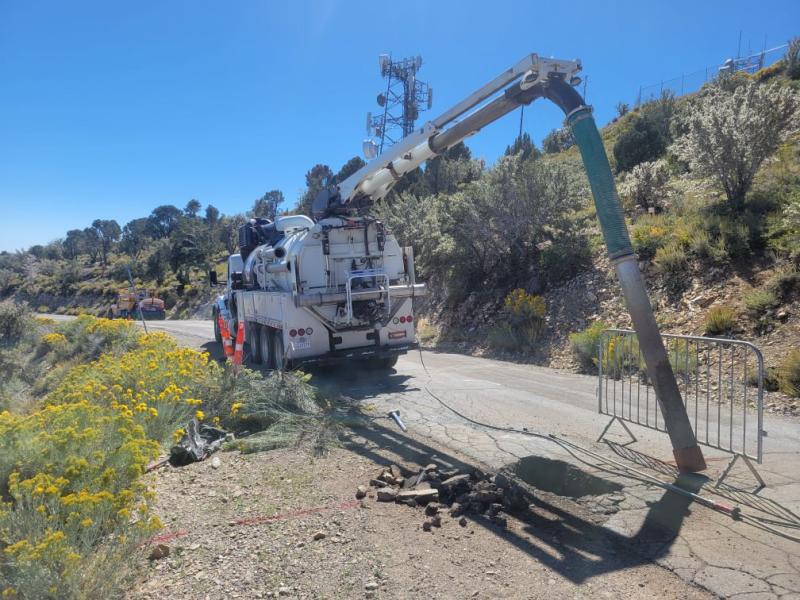
Recent innovations in hydrovac nozzle design have dramatically improved the performance, safety, and versatility of hydrovac trucks, allowing operators to excavate faster, use less water, and work more precisely in challenging conditions. Modern hydrovac nozzles have evolved from simple single-orifice designs to sophisticated multi-jet, rotating, and smart-controlled systems that optimize water delivery while minimizing collateral damage to utilities and surrounding soil.
One of the most significant advances is the development of rotating turbo nozzles specifically engineered for hydrovac applications. Unlike static nozzles that deliver a single high-pressure stream, these rotating heads spin at 2,000–4,000 rpm, creating a conical cutting pattern that removes soil up to three times faster than traditional designs. The centrifugal motion also reduces nozzle reaction force by as much as 70%, dramatically lowering operator fatigue and improving control when hydrovac trucks are used for daylighting or potholing around delicate fiber optic or gas lines. Manufacturers now incorporate sapphire or tungsten carbide inserts that extend nozzle life from a few hundred hours to over 2,000 hours even when cutting through Las Vegas caliche or rocky fill.
Variable-geometry and switchable nozzles represent another leap forward. New hydrovac nozzles allow operators to change spray patterns instantly—from a narrow 0° pencil jet for cutting caliche to a wide 40° fan for soft sandy soils—without leaving the wand. Some models feature electronic actuators controlled from the hydrovac truck cab, letting the operator adjust pressure and pattern in real time based on soil feedback. This adaptability has reduced water consumption by 25–40% on average, a critical advantage in water-restricted regions and when hydrovac trucks are equipped with recycling systems.
Safety-focused innovations include low-recoil and zero-thrust nozzle designs that virtually eliminate kickback. These use venturi principles and counter-balanced jet arrangements to neutralize reaction forces, allowing safer operation at pressures up to 5,000 psi. Several manufacturers have introduced insulated composite nozzles that remain cool to the touch even when hydrovac trucks run heated water through frozen ground, preventing burns during winter operations.
Perhaps the most exciting development is the integration of smart sensors into hydrovac nozzles. Some premium nozzles now embed pressure, temperature, and flow sensors that communicate wirelessly with the truck’s control system. When the nozzle detects sudden resistance—indicating proximity to a hard utility—the hydrovac system automatically reduces pressure or pulses the flow to prevent damage. This “utility-aware” technology has shown strike reduction rates of over 90% in field trials.
Material science breakthroughs have produced lighter, stronger nozzles using aerospace-grade titanium and carbon-fiber-reinforced polymers. These weigh 40–60% less than stainless steel equivalents while resisting corrosion from recycled water and abrasive slurries. The reduced weight extends operator endurance and allows hydrovac crews to use longer wand extensions for remote digging without sacrificing control.
Ergonomic design has not been overlooked. New hydrovac nozzles feature sculpted grips, balanced weight distribution, and vibration-dampening materials that reduce hand-arm vibration syndrome risk during extended use. Quick-connect systems now allow nozzle changes in seconds rather than minutes, minimizing downtime on busy job sites.
These innovations collectively enable hydrovac trucks to excavate faster with less water, reduce operator fatigue, extend component life, and dramatically improve safety around buried infrastructure. As nozzle technology continues to advance, hydrovac excavation is becoming not only safer and more precise but also more economically competitive against traditional mechanical methods across an ever-widening range of applications.
If you have an upcoming excavation project you'd like to discuss, contact the professional excavators here at Hole Hogz. We service Las Vegas, Henderson, Boulder City, and most parts of Clark County Nevada.