


How to Optimize Water Usage in Hydroexcavation
Water conservation is important in Las Vegas.
Posted 03:00 February 13, 2026
Last Updated 03:00 February 13, 2026
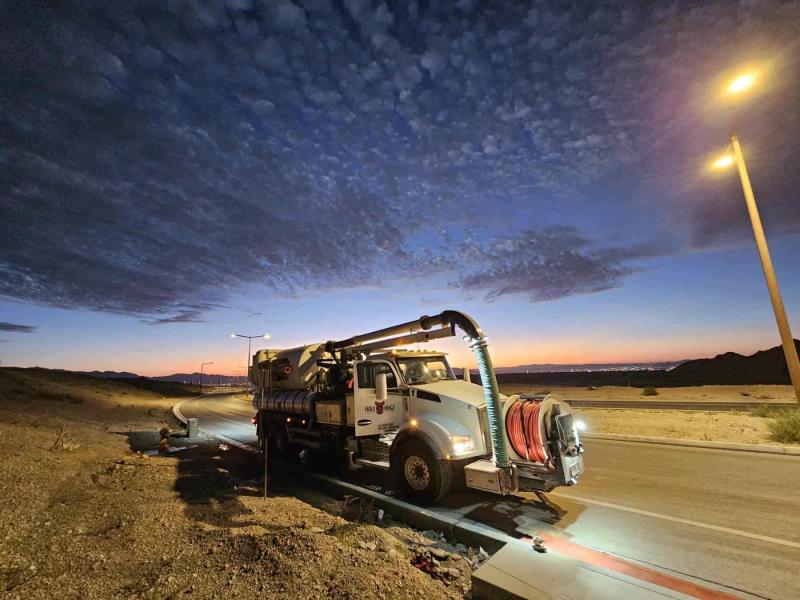
Optimizing water usage in hydroexcavation is critical for hydrovac trucks, especially in water-scarce regions or during long projects where freshwater costs and disposal fees add up quickly. Efficient water management lowers operating expenses, reduces environmental impact, and extends on-site runtime before refills or offloads are needed.
The most effective way to conserve water begins with proper nozzle selection and technique. Modern hydrovac nozzles—fan, rotating, or oscillating types—deliver a wider, lower-pressure pattern that fluidizes soil more efficiently than narrow, high-velocity streams. Operators should start with the lowest effective pressure (often 1,500–2,500 psi for sandy soils, 3,000–4,000 psi for denser materials) and use sweeping, angled wand motions rather than stabbing straight down. This creates slurry faster with less total water volume—skilled operators routinely cut consumption by 30–50% compared to beginners.
Adjusting flow rate is equally important. Most hydrovac trucks allow operators to throttle water output between 5–20 gallons per minute. Matching flow to soil conditions prevents over-saturation; loose sand needs lower flow, while tight clay or caliche may require higher flow but shorter bursts. Training operators to “pulse” the trigger instead of holding it continuously further reduces waste.
On-board water recycling systems represent the biggest leap in optimization. Advanced hydrovac trucks use shaker decks, cyclone separators, or filter presses to separate solids from slurry in real time. Clean or semi-clean water is returned to the supply tank for reuse, achieving 70–90% recovery rates on many jobs. This capability turns a typical 1,200-gallon freshwater tank into 4,000–10,000 gallons of effective digging capacity before a refill is required. In dry climates or municipalities with strict water restrictions, recycling often makes the difference between completing a shift and stopping early.
Pre-job planning also conserves water. Accurate utility locating and soil borings let operators anticipate conditions and select the right pressure/flow settings from the start. Smaller test holes confirm soil response before full excavation, avoiding unnecessary water use on unproductive attempts. Temperature control helps too. Heated water (120–180°F) penetrates frozen or compacted soil more efficiently, requiring less volume to achieve the same fluidization. In cold-weather regions, this single adjustment can reduce water consumption by 20–40%.
Finally, routine maintenance prevents waste from leaks, worn nozzles, or inefficient pumps. A dripping hose or degraded nozzle tip can lose hundreds of gallons per shift unnoticed. Daily inspections and timely replacement keep systems operating at peak efficiency.
When hydrovac operators combine smart nozzle choice, trained technique, real-time recycling, pre-job soil knowledge, heated water when needed, and diligent maintenance, water usage per cubic yard excavated drops significantly—often from 15–25 gallons per cubic yard down to 5–10 gallons. This optimization not only cuts direct costs (water purchase, hauling, disposal) but also shortens project timelines, reduces environmental footprint, and improves regulatory compliance in water-restricted areas. In today’s market, hydrovac contractors who master water efficiency gain a strong competitive edge.
If you have an upcoming excavation project you'd like to discuss, contact the professional excavators here at Hole Hogz. We service Las Vegas, Henderson, Boulder City, and most parts of Clark County Nevada.