


How Deep Can a Hydrovac Truck Actually Dig?
It's pretty deep.
Posted 11:09 September 17, 2026
Last Updated 11:09 September 17, 2026
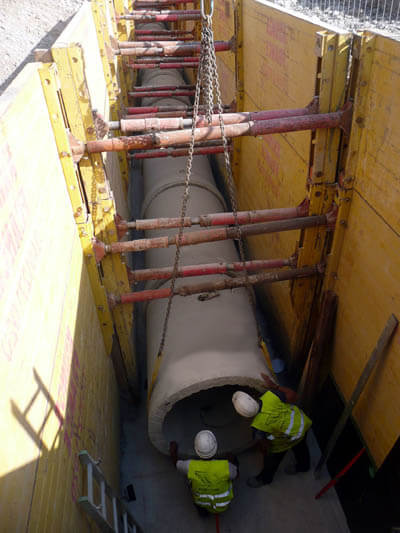 How deep a hydrovac truck can actually dig depends on several factors, including the vacuum system, hose configuration, soil conditions, excavation diameter, truck setup, and the specific type of work being performed. In practical field use, hydrovac trucks are commonly used for potholing, daylighting, trenching, and exposing utilities at moderate depths, but specialized equipment can reach much deeper when conditions allow. A hydrovac truck works by using pressurized water to break apart soil and a vacuum system to lift the loosened material through a hose into a debris tank. The deeper the excavation becomes, the more important vacuum strength and airflow efficiency are to maintaining production.
For many routine utility projects, hydrovac excavation depths of several feet to around 20 feet are common. These depths are typically more than enough for locating water lines, gas mains, electrical conduits, sewer services, fiber optic cables, and other buried infrastructure. However, a properly equipped hydrovac truck can often work at significantly greater depths. Positive displacement blower systems are especially useful for deep excavation because they can maintain strong vacuum performance over longer hose runs and greater vertical lift. Depending on the equipment and site conditions, some hydrovac systems can operate at depths of 30, 40, or even more than 50 feet.
The type of vacuum system makes a major difference. Fan-based hydrovac trucks can move very large volumes of air and are highly productive for many shallow and moderate-depth applications. As excavation depth increases, however, positive displacement blowers generally perform better because they can maintain stronger vacuum under higher resistance. This makes them well suited for deep holes, long-distance suction, and projects where the hydrovac truck cannot park directly beside the excavation.
Soil conditions also affect how deep a hydrovac truck can dig efficiently. Loose sand and soft soil may be easier to remove than dense clay, rocky ground, or heavily compacted material. Frozen soil can also reduce production unless the hydrovac truck is equipped with a heated water system. At greater depths, heavier slurry must travel farther vertically through the hose, which places additional demands on the vacuum system. Operators may need to adjust water flow, hose diameter, excavation technique, or production expectations as depth increases.
Hose length and routing are another consideration. Every additional foot of hose, bend, restriction, and change in elevation creates resistance to airflow. A hydrovac truck positioned close to the excavation will usually perform more efficiently than one working through hundreds of feet of hose. For deep excavation, keeping hose runs as straight and short as possible can help maintain suction and reduce the chance of plugging.
Safety also becomes increasingly important as depth increases. Even though hydrovac excavation is precise, a deep hole can still create collapse, access, and confined-space hazards. Crews must follow applicable excavation safety requirements, evaluate soil stability, and use protective systems when workers need to enter an excavation.
Overall, there is no single maximum depth that applies to every hydrovac truck. Routine hydrovac work is often relatively shallow, but specialized trucks with powerful blower systems can reach several dozen feet when conditions are favorable. The practical depth limit depends on equipment capability, soil, hose distance, excavation size, and jobsite safety requirements.
If you have an upcoming excavation project you'd like to discuss, contact the professional excavators here at Hole Hogz. We service Las Vegas, Henderson, Boulder City, and most parts of Clark County Nevada.