


Disposal and Management of Excavated Slurry
There are numerous local, state, and federal codes to follow.
Posted 06:51 November 28, 2025
Last Updated 06:51 November 28, 2025
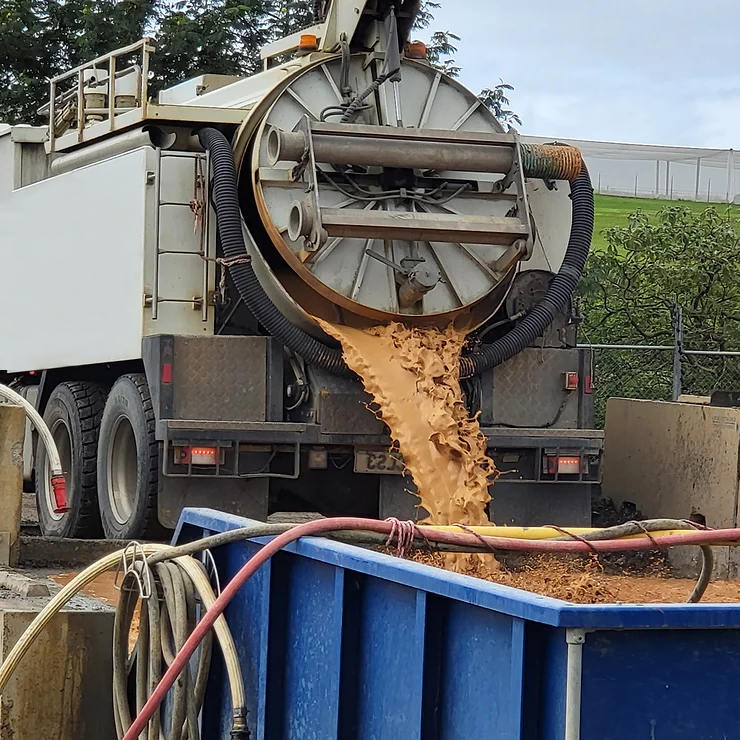
Disposal and management of excavated slurry generated by hydrovac trucks represent a critical operational and environmental consideration that directly affects project cost, schedule, and regulatory compliance. Hydrovac trucks produce a liquid mixture of water and soil that ranges from thin, sandy soup in desert regions to thick, clay-heavy sludge in wetter climates, typically filling debris tanks of 1,000–3,500 gallons per shift. Proper handling of this slurry has evolved from simple dumping at landfills to sophisticated on-site processing and beneficial reuse, driven by rising disposal fees, stricter environmental regulations, and innovations in hydrovac equipment design.
The traditional approach of hauling full hydrovac tanks to permitted disposal facilities remains common but increasingly expensive, with tipping fees ranging from $50 to $300 per cubic yard depending on jurisdiction and contamination status. In many urban areas, slurry is classified as industrial or construction waste requiring special handling, while clean soil-water mixes may qualify for lower-cost clean-fill sites. Transportation distance significantly impacts economics; a round trip exceeding 30–40 miles can add $500–$1,500 per load in fuel and labor, often making off-site disposal the second-largest cost after the hydrovac truck itself. Some municipalities now prohibit liquid waste disposal entirely, forcing operators to dewater slurry before landfill acceptance.
Modern hydrovac trucks increasingly incorporate on-board dewatering systems that dramatically reduce disposal volume and cost. Shaker decks, roll-off filter boxes, and centrifuge units separate solids from water directly at the job site, allowing clean water to be recycled back into the hydrovac tank or discharged under permit while dry or semi-dry solids are hauled away at a fraction of the original weight. Advanced hydrovac units equipped with polymer injection systems can achieve 70–90% water recovery within minutes, cutting disposal loads by up to 85%. This capability proves particularly valuable in water-restricted regions where recycling also reduces freshwater consumption and associated fees.
Beneficial reuse has emerged as another cost-effective management strategy. Clean, non-contaminated slurry from hydrovac operations can often be repurposed as engineered fill, daily cover at landfills, or soil amendment after testing confirms absence of pollutants. Some contractors partner with local farms or landscaping companies to accept dewatered material, occasionally receiving payment rather than paying disposal fees. In contaminated environments, such as petroleum sites, specialized hydrovac trucks with lined tanks and vacuum filtration systems contain and transport hazardous slurry to treatment facilities, ensuring compliance with EPA and state regulations.
Regulatory classification drives much of the management complexity. Hydrovac slurry is typically tested for pH, total petroleum hydrocarbons, heavy metals, and VOCs to determine proper disposal tier. Operators who maintain detailed chain-of-custody documentation and pre-characterize expected soil conditions can often secure blanket disposal approvals that speed operations. Vacuum truck providers offering integrated waste management services—combining hydrovac excavation with licensed transport and disposal—eliminate subcontractor coordination and liability gaps for general contractors.
Effective slurry management ultimately transforms what was once considered waste into a controllable cost center. Projects that incorporate on-board dewatering, water recycling, and pre-arranged reuse agreements routinely reduce disposal expenses by 60–80% compared to traditional haul-and-dump methods. As disposal costs continue rising and environmental scrutiny increases, the ability to efficiently manage hydrovac slurry has become a key differentiator among service providers and a significant factor in overall project economics.
If you have an upcoming excavation project you'd like to discuss, contact the professional excavators here at Hole Hogz. We service Las Vegas, Henderson, Boulder City, and most parts of Clark County Nevada.