

Choosing the Right Hydrovac Truck for Your Project
Many different types of trucks are available.
Posted 04:11 November 07, 2025
Last Updated 04:11 November 07, 2025
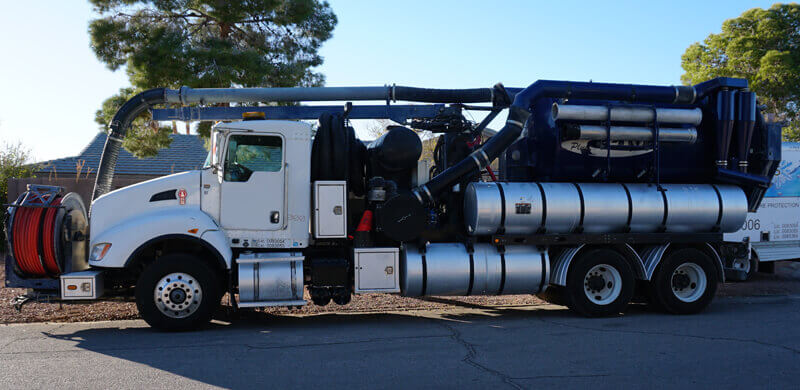
Choosing the right hydrovac truck for a project in Las Vegas requires careful evaluation of the city’s unique soil conditions, extreme climate, tight urban spaces, and dense underground utilities. Hydrovac trucks vary widely in water pressure, vacuum power, tank capacity, and features, so matching the equipment to the job ensures safety, efficiency, and cost-effectiveness. With the global hydrovac market projected to reach $1.5 billion by 2025, selecting the proper hydrovac truck can prevent utility strikes averaging $100,000 per incident and keep projects on schedule in a region where delays are expensive.
The first consideration is soil type. Las Vegas features loose, sandy topsoil overlying hard caliche layers that demand high water pressure—typically 3,000–5,000 psi—and often heated water to penetrate effectively. A hydrovac truck with a robust boiler system (at least 500,000–800,000 BTU) and a high-pressure pump (minimum 10–20 GPM) is essential for breaking caliche without excessive time or water use. For projects involving only sandy soils, such as potholing in newer subdivisions, a mid-range hydrovac truck with 2,000–3,000 psi may suffice and reduce rental costs.
Tank capacity and vacuum strength are equally critical. Downtown Las Vegas and Strip-area projects often restrict truck size, making compact hydrovac trucks with 1,000–1,500 gallon debris tanks ideal for maneuvering in traffic and fitting within lane closures. Larger jobs, such as pipeline trenching along the outskirts or airport expansions, benefit from 2,500–3,500 gallon hydrovac trucks with 5,500–6,000 CFM blowers to minimize offloading trips and keep productivity high in 110°F heat when water and fuel consumption rise.
Water conservation is non-negotiable in a city that receives only 4 inches of rain annually. Hydrovac trucks equipped with water recycling systems can reuse 70–90% of water, dramatically lowering consumption and disposal fees while complying with Southern Nevada Water Authority restrictions. Pairing this with a hydrovac truck that offers adjustable pressure and flow prevents waste during lighter tasks like daylighting fiber optic lines.
Access and reach matter in congested Las Vegas corridors. Hydrovac trucks with extended boom reach (up to 25–30 feet) or remote hose capabilities (50–100 feet) allow operators to stay on the street while digging under sidewalks or medians, reducing permitting headaches and traffic control costs. For high-rise utility work near resorts, a hydrovac truck with a telescoping boom and wireless remote control improves safety and precision around overhead power lines.
Finally, consider cold-weather performance and reliability. Although rare, Las Vegas winters can dip below freezing, turning caliche into concrete-like material. A hydrovac truck with a powerful hot-water boiler and insulated lines ensures productivity year-round. Look for Tier 4 Final engines and robust filtration to handle the fine desert dust that destroys lesser equipment.
By matching water pressure and heating capacity to caliche, selecting tank size for urban or suburban constraints, prioritizing water recycling, ensuring adequate reach, and choosing cold-weather-ready hydrovac trucks, contractors can minimize downtime, prevent utility damage, and control costs. Consulting local hydrovac providers familiar with Clark County permitting and soil profiles often reveals fleet options tailored specifically to Las Vegas conditions, making the right hydrovac truck an investment that protects both budget and schedule in one of the country’s most demanding construction environments.
If you have an upcoming excavation project you'd like to discuss, contact the professional excavators here at Hole Hogz. We service Las Vegas, Henderson, Boulder City, and most parts of Clark County Nevada.